My Transpac Experience
Co-Chairing Follow Me Boats at Transpac 2025
What "Follow Me" Actually Means
Transpac is one of the oldest and longest offshore races in the world — a downwind sprint from Point Fermin in Los Angeles to the Diamond Head buoy off Honolulu, run every other year since 1906. The fastest sleds finish in under six days. The smaller cruisers can take more than two weeks. They all arrive at the same finish line, but once they cross it they scatter — different boats end up at different marinas around Honolulu, depending on where they're tied up for their stay.
I'm a member of Waikiki Yacht Club, but for the race I was working under the Transpac Yacht Club, who runs the event. My job sat at the seam between the two: I co-chaired the Follow Me committee, which exists to make sure every finishing boat — no matter what hour it crosses the line — is met at the finish and guided safely into whatever marina they're calling home for the next few weeks.
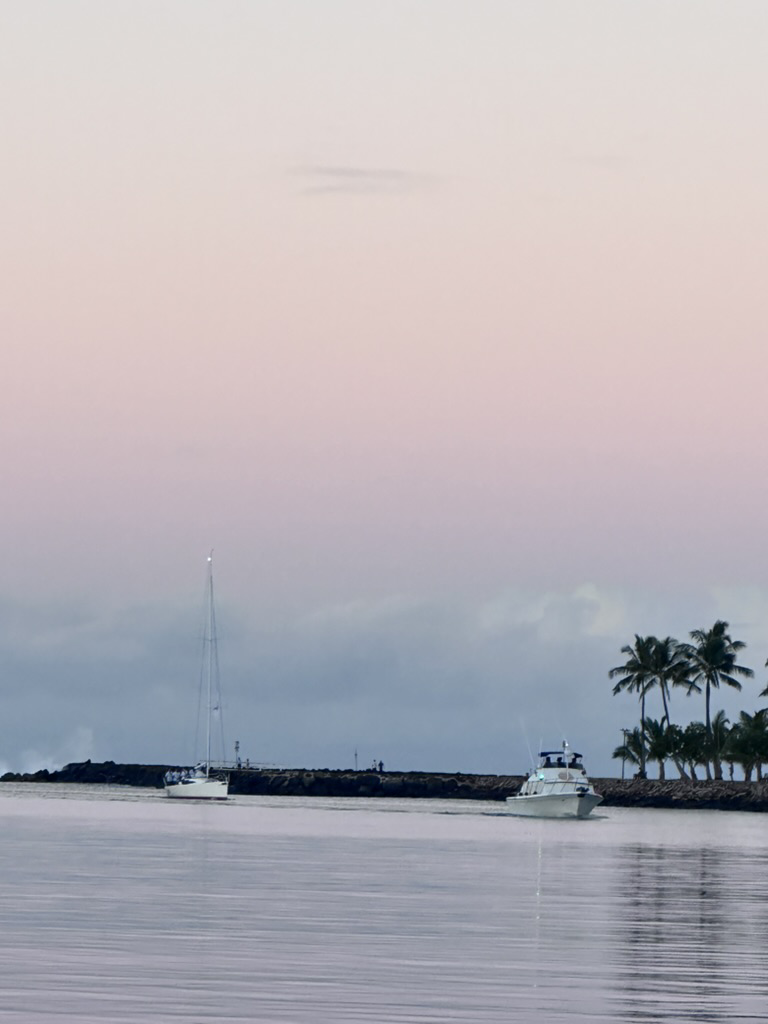
The job has two halves. The first half is tracking. From about 100 miles out, I'd start watching each boat closely, running the math on speed and heading to lock in an ETA at the finish. The second half is logistics: I had a team of 13 power boats, and as ETAs firmed up, I'd dispatch the right boat to be sitting outside the finish line when each sailboat arrived, ready to take them in. It's part escort, part welcoming party, part safety net.
I co-chaired Follow Me for 2025. What I did not fully appreciate, when I said yes, was that I had effectively signed up to keep vampire hours for ten consecutive nights.
The 10-to-10 Shift
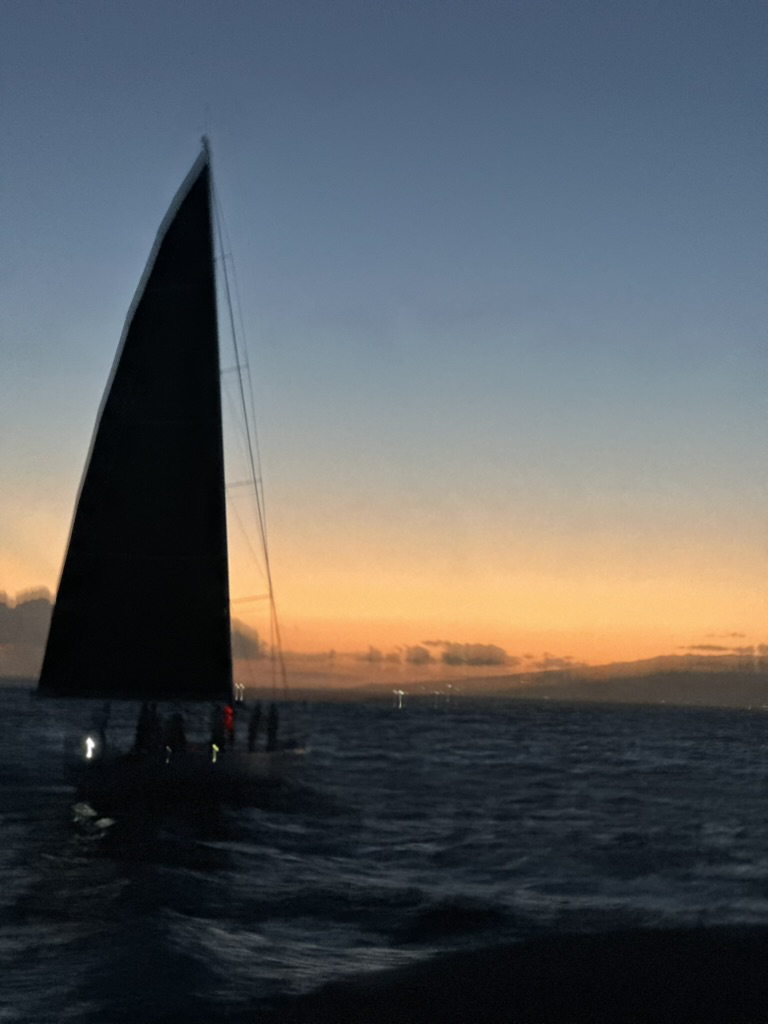
My shift was 10 p.m. to 10 a.m. Ten nights in a row.
The first night was the hardest. Coffee, granola bars, weather check, radio check, ETA spreadsheet, and a long stretch of staring at AIS targets crawling across the screen. By the third night, the rhythm sets in. By the fifth, you stop noticing how strange it is to eat dinner at 8 p.m. and lunch at sunrise.
You learn the cadence of the race fleet. The sleds come in first — the big, fast, professional programs whose finishes happen at fire-hose speed. Then the mid-fleet, often three or four boats stacked up within the same hour. Then the tail of the fleet trickles in over days, sometimes a single boat between sunrise and sunset.
You learn, too, what an exhausted ocean racer looks like at 3 a.m. Some of them are wired and giddy, hooting from the cockpit when they cross the line. Some are dead quiet on the radio. Some have lost their headsail two days out and limped in under jury rig. Almost all of them want the same two things when their lines are made fast: a cold drink and a hug.
Fifty-Five Boats
Across those ten days, we met 55 sailboats at the finish and walked them in.
Fifty-five ETAs to lock down. Fifty-five power-boat dispatches. Fifty-five tired crews handed off to the marina that had a slip waiting for them. Some nights felt like an assembly line — five or six boats in a stretch, ETAs sliding around as the wind shifted in the last hundred miles. Other nights we'd sit for hours watching one slow ULDB inch toward Diamond Head, and then the whole crew on the dock would jump up at once to grab lines when she finally arrived.
The Fourth Night
The moment I'll never forget happened on night four.
Eight boats finished within about two hours of each other. I had been watching the ETAs creep toward the same window for most of the previous afternoon — different boats, different speeds, different angles, all bending toward the same little slice of the night — and there was almost nothing I could do to spread them out. They were going to arrive when they were going to arrive.
The math was the part that stressed me out. I had 13 power boats on paper, but not every Follow Me boat ran night ops. A chunk of the fleet only worked daylight hours, and the overnight roster was thinner. As I watched the cluster tighten on the screen, I kept running the same calculation in my head: do we have enough boats on the water tonight to meet all eight of these finishers, or am I about to leave somebody bobbing off Diamond Head waiting on us?
We got it done. I burned the radio re-juggling assignments, called in one more boat that hadn't planned on being out, and somehow every single one of those eight finishers had a Follow Me on station when they crossed the line. None of them ever knew how close it got. That, I think, is the test of whether the committee is doing its job — the racers shouldn't have to think about any of this.
The Crews
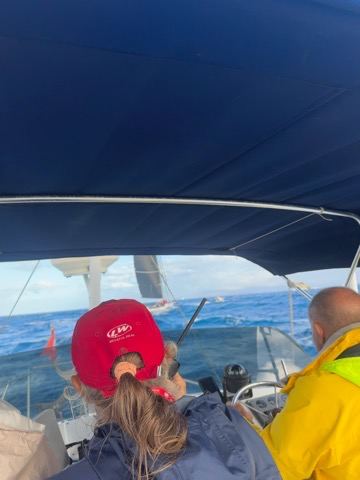
What surprised me most wasn't the racing — I knew Transpac would deliver great racing. It was the people I ended up sharing those nights with. The volunteer crew on the Follow Me boats is a rotating cast of sailors, ex-racers, harbor regulars, and a few first-timers who said yes to a 12-hour overnight slot and showed up anyway. Twelve hours is a long time to be on a small boat with someone. By the end of the ten days, you know who takes their coffee black, who has the best stories, and who you'd want next to you if conditions got squirrelly.
Daylight
By 10 a.m. each morning, I'd hand off to the day shift, walk back across the dock past whichever boats had just finished, and try to remember what I was supposed to do with the rest of my day. Mostly I'd sleep until 6 p.m., eat something, and head back out.
What I'll Remember
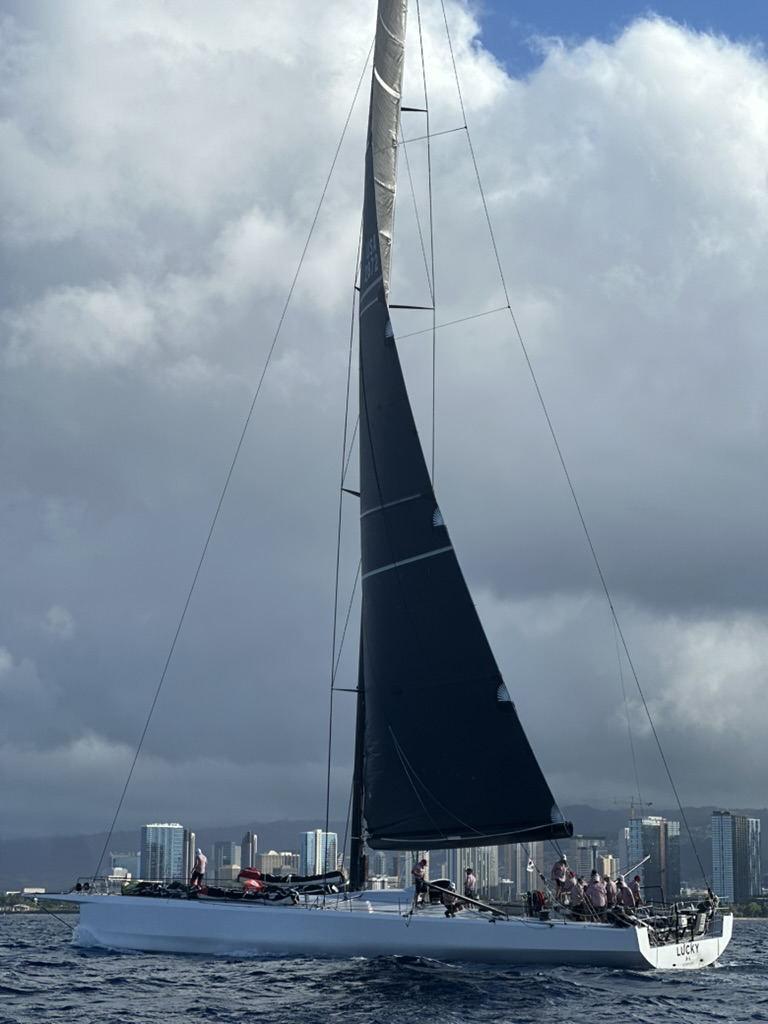
Long after the numbers fade — the 10 nights, the 55 boats, the 120 hours on the water — what I think I'll remember is the radios. The exhaustion in someone's voice when they finally say "we see you" out of the dark. The relief on the other end when they realize, after two weeks alone with their crew on the Pacific, that they're not going to have to figure out the last mile by themselves.
That's really the whole point of Follow Me. You go all that way, and at the very end, somebody comes out to bring you home.